
“Hands-on, minds-on learning”: How Rice Lake Students and a Nature Conservancy Are Growing More Than a Garden
Author: Shannon Johnson, Media Specialist
Rice Lake students are digging up some new skills outside the classroom.
Last year, the Rice Lake School District partnered with the River Doc Nature Conservancy to give high school students an opportunity to grow, care for and harvest their own food through a school garden.
“I had seen other schools, or other districts, start school farms, some with animals and some with gardening,” said Peter Kolpack, Rice Lake agriculture teacher and FFA advisor. “We had the space and the opportunity to take advantage of that, and it just seemed like we should.”
So, he turned to his district administration and Cate Lucas, naturalist educator and program director at the River Doc Nature Conservancy.
“It was cool to hear Pete say, ‘Hey, I think that I've got a horticulture class that's going to come out. We're going to build the garden,’” Lucas said. “The Nature Conservancy is 55 acres of land, and 33 of those acres are farmed right now.”
But Kolpack brought more than an idea. He came with a plan, including potential grants, a new, hands-on curriculum, and a way to give back to the Rice Lake community.
“Right away, I was really excited to hear about it,” said Lucas.
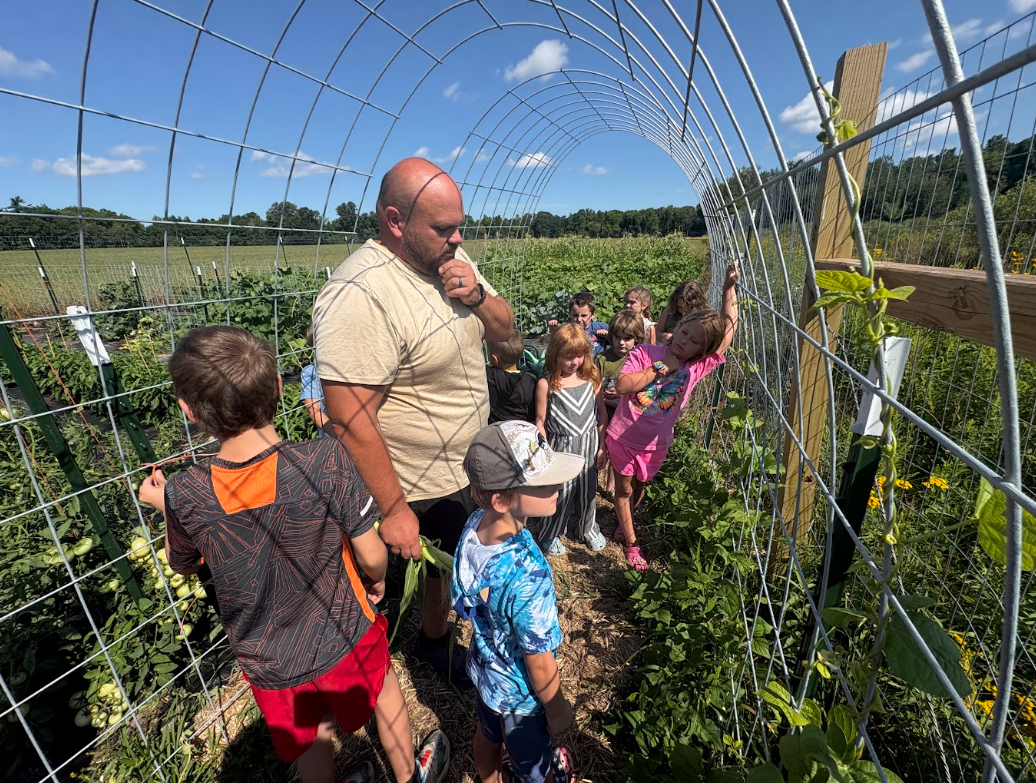
The result…a school garden at the conservancy, approximately 50 feet by 95 feet, a sizable outdoor classroom filled with vegetables and opportunities to learn.
Growing more than vegetables
The garden includes tomatoes, peppers, cucumbers, broccoli, pumpkins and more.

But what students are growing isn't the only thing taking root.
Throughout the summer, students volunteered to return to the garden to weed, care for the plants and harvest the produce. A student who had graduated also received a scholarship to serve as the garden's summer manager and caretaker.
When school resumed, students continued to visit the garden.
“We've taken my classes out to the garden twice, and our final [visit] will be next week when we do our final harvest,” Kolpack said.
The garden also became part of the district's summer school programming.
During one summer session, a Nature Explorers class spent part of a morning watering the garden during a particularly dry stretch. During another session, students had the opportunity to taste vegetables they had helped grow.
Lucas remembers one student's reaction in particular.
“When I asked him ‘What was your favorite thing the whole two weeks? And he said ‘Eating the cucumbers from the garden,’ with a big smile on his face.”
For Lucas, that reaction says a lot about the value of giving kids opportunities to experience food firsthand.
For Kolpack, one of the biggest lessons is simple: “The food doesn't just come from a grocery store.”
Students are also developing skills that extend well beyond gardening.
“...work ethic, responsibility and being careful because you're caring for something that we're hoping to eat,” Kolpack said.
Those lessons can be especially meaningful for students who don't grow up around agriculture.
“A lot of our kids are coming from a nonagricultural background, so just giving them that hands-on experience is important,” he said.
And then, in another important lesson, they get to see how the food can benefit someone else. The produce grown by students isn't simply staying in the garden.
Last summer, the school’s harvested produce was donated to Paul's Pantry, a food pantry in Rice Lake. Produce has also since been directed to the school's lunch kitchen and food service program.
An outdoor classroom
The garden is part of a larger effort at River Doc Nature Conservancy to bring students outside the traditional classroom.
The conservancy was donated in September 2021 by Dr. Rod Olson and Carol Olson. Today, the property is made up of approximately 88 acres. The site includes a little more than two miles of trails and two bridges and welcomes school groups throughout the year.
“We don't just learn in a school building. We learn in all sorts of different environments,” she said. “We meet our students where they're at to be able to educate mind, body and spirit.”

Growing beyond the garden
The garden isn't the only way Rice Lake students are learning about growing food.
At the high school, students also work with three aquaponics systems that include tilapia. The system filters water through a gravel bed and recycles nutrients from the fish waste to help grow plants, including peppers.
Students also manage six lettuce towers, which can be harvested multiple times throughout the school year.
Together, these projects give students different ways to explore food production, agriculture and natural resources, while connecting classroom concepts to something tangible.
The Future of the River Doc Garden
What’s next for the school garden?
Next year, Kolpack plans to add another layer to the project by tracking the garden's total harvest. But for right now, the goal is to continue building the program.
“I think we'll try it for two or three years before we get too ambitious or expand,” Kolpack said. “I want to make sure we keep things at a manageable level.”
The garden started with a few seeds, but what is growing extends far beyond the harvest. For Rice Lake students, it’s a lesson in learning, giving back and growing a healthier community together.
How to Get Involved
Want to learn more or get involved? Cate Lucas can share more information about volunteering at River Doc Nature Conservancy, including opportunities to help with the garden, trails and other projects. Contact Cate at lucasc@ricelake.k12.wi.us to learn more.
To learn more specifically about the school garden and the work students are doing, reach out to Peter Kolpack at kolpackp@ricelake.k12.wi.us. Whether you’re interested in volunteering, supporting the garden or simply learning more, there are opportunities to help this growing effort building deeper roots in the community.
Mark Your Calendars!
The first annual Rice Lake Halloween Spooktacular is happening Saturday, Oct. 10, from 5:30–8:30 p.m. at River Doc Conservancy. Enjoy a lit pumpkin walk, s’mores, hot cocoa, cider and coffee, all available for a free-will donation. Proceeds will help sponsor local families for Christmas.
The Rice Lake Public Library is hosting a BioBlitz as part of the Wisconsin Science Festival. Join the River Doc Nature Conservancy on Thursday, October 15, from 4–5 p.m. to explore, observe and document the plants, animals and other life found around Rice Lake. It’s a hands-on opportunity to connect with nature, discover local biodiversity and unleash your curiosity!